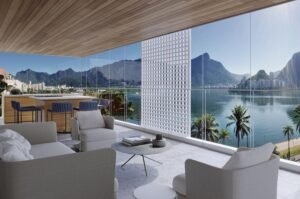
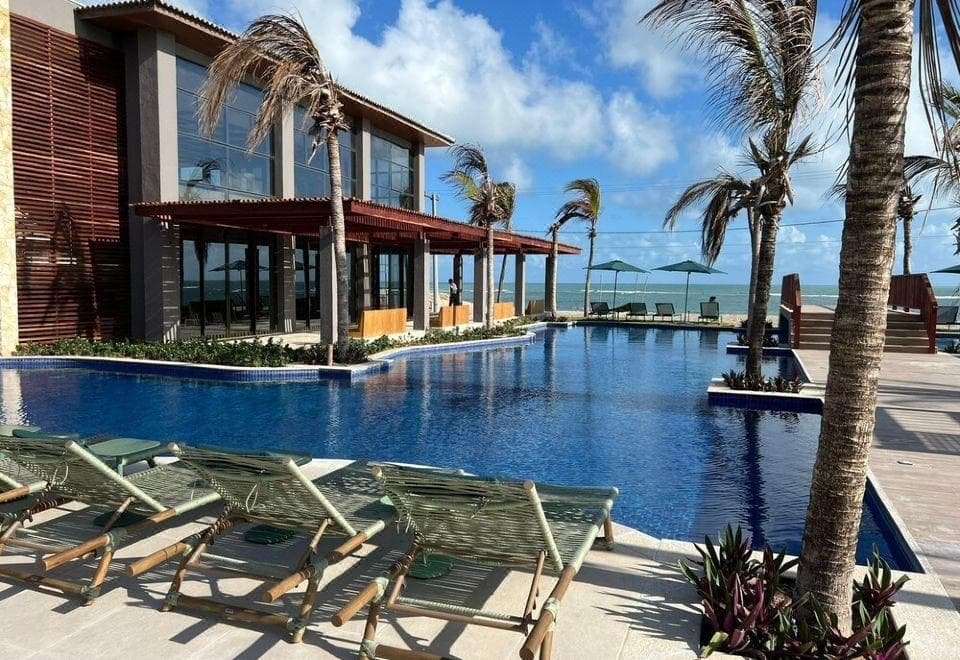
With its long coastline, warm climate and growing tourism industry, Northeast Brazil has become an increasingly interesting region for property buyers. And the numbers are starting to reflect that interest.
In 2025, residential property prices increased by 16.25% in Salvador, 12.61% in Fortaleza and 4.57% in Recife, according to the FipeZAP index. At the same time, international tourism continued to grow strongly. Bahia welcomed 211,539 international visitors in 2025, up 47.3% from the previous year, while Ceará recorded a record 115,735 international arrivals.
For buyers, however, Northeast Brazil is about more than rising prices and tourism statistics. The region offers a wide range of possibilities: a city apartment in Fortaleza, real estate in Recife, a second home on the Bahia coast or a property with rental potential.
Whether you are looking for a home, a second residence or an investment, the Northeast offers several markets worth exploring. In this guide, we look at Fortaleza, Recife and Bahia and what makes each of them interesting for international property buyers.
City to Coast
The Northeast is Brazil’s second-largest region by population, home to more than 56 million people across nine states. It is also one of the country’s most geographically diverse regions, ranging from major metropolitan areas to small coastal towns and established tourism destinations.
Its coastline stretches for more than 3,000 kilometres, with a large concentration of Brazil’s best-known beach destinations. Cities such as Fortaleza, Recife and Salvador combine coastal living with established urban economies, while destinations further along the coast have developed around tourism, hospitality and second homes.
The region is also increasingly connected to international markets. Fortaleza, Recife and Salvador all have international airports, with direct connections to destinations in Europe and the Americas. Within Brazil, frequent domestic connections link the Northeast to São Paulo, Rio de Janeiro and other major economic centres.
The result is a region with very different local markets rather than one uniform property market. A large city such as Recife has a different economic and residential profile from a coastal destination in Bahia, while Fortaleza sits somewhere between the two, with a major urban population and an extensive tourism-oriented coastline.
Fortaleza‘s diverse Market
Fortaleza sits at the centre of one of Brazil’s most active coastal regions. With around 2.4 million inhabitants, it is a major economic and population centre rather than a city built primarily around tourism.
Its importance extends well beyond the city limits. Ceará’s coastline connects Fortaleza with a series of established destinations, including Cumbuco, Aquiraz, Porto das Dunas and Flecheiras. Further west, Jericoacoara has developed into one of Brazil’s best-known international tourism destinations. Together, these locations create a broad coastal economy with different levels of urbanisation and tourism activity.
The region also has strong domestic demand. Brazilian travellers account for a significant share of tourism across Ceará, while international arrivals are growing. In 2025, the state recorded 3.48 million tourists, and Fortaleza’s airport handled more than 6.2 million passengers during the year.
Connectivity is an important part of this picture. Fortaleza’s airport provides direct international connections and frequent domestic flights to Brazil’s major cities. This makes the city both a destination in itself and a gateway to the wider Ceará coastline.
The result is a region where urban and coastal markets overlap. Fortaleza has the population, infrastructure and economic activity of a major Brazilian city, while the surrounding coastline adds a much stronger tourism and second-home component. This combination gives Ceará a property market that is considerably broader than Fortaleza alone.
Recife on the Rise
Recife is one of the largest cities in Northeast Brazil, with a metropolitan population of more than 4 million people. As the capital of Pernambuco, it is one of the region’s main centres for business, healthcare, education, technology and services.
Its property market has also been gaining momentum. According to FipeZAP, residential prices in Recife increased by 5.93% in the twelve months to May 2026. The average asking price reached R$8,680 per m², putting Recife below Fortaleza but above several other major Northeast markets.
The city combines a large permanent population with a strong coastal residential market. Boa Viagem is particularly significant, with high-density residential development along the Atlantic coast and a concentration of shops, restaurants, hotels and services.
Recife also provides access to Pernambuco’s wider tourism economy. Destinations such as Porto de Galinhas and Praia dos Carneiros attract visitors from across Brazil and abroad, while Recife/Guararapes International Airport provides connections to major Brazilian cities and international destinations.
This gives Recife a different profile from smaller beach destinations in the Northeast. It is a major metropolitan market first, with tourism and coastal living forming an important part of the wider picture.
The Bahia Effect
Bahia is arguably the most diverse property market in Northeast Brazil. With more than 14 million inhabitants and over 900 kilometres of coastline, the state combines a major capital city with some of Brazil’s best-known coastal destinations.
The numbers show how strong the underlying tourism market has become. Tourism activity in Bahia grew by 6.6% in 2025, ahead of the national growth rate of 4.6%. The state’s main airports handled around 11 million passengers, while international arrivals increased by 37.1% to approximately 279,000 visitors.
Salvador is at the centre of the state’s urban property market. It recorded the strongest residential price growth among the 56 cities tracked by FipeZAP in 2025, with prices rising 16.25%. The average asking price reached R$7,972 per m² by December.
Away from Salvador, the market changes considerably. Porto Seguro received around 2.47 million visitors in 2025, while nearby Trancoso has developed a very different, high-end property market shaped by luxury tourism, second homes and limited development.
Further north, destinations such as Praia do Forte offer another combination of tourism, residential development and proximity to Salvador. Other parts of the coast, including Itacaré and the region around Morro de São Paulo, have developed their own property and hospitality markets.
This diversity is what makes real estate in Bahia particularly difficult to describe as a single market. Salvador operates as a large metropolitan market, while the coastal destinations vary from established tourism centres to smaller, lifestyle-oriented communities. The differences in demand, pricing, development and liquidity can be substantial from one location to the next.
Buying as an Investment
The investment case for Northeast Brazil is not the same everywhere. Rental demand, property prices and tourism vary considerably between cities and coastal destinations, which can lead to very different returns.
Recife is a good example. In April 2026, the city had an estimated residential rental yield of 8.55% per year, the highest among the 22 Brazilian capitals monitored by FipeZAP. Salvador stood at 6.97%, while Fortaleza was at 4.64%. The national average was 6.08%.
These figures are based on advertised rents and property prices for apartments and should not be confused with an investor’s net return. Taxes, condominium fees, maintenance, management, vacancy and transaction costs can all reduce the actual return.
Tourism adds another dimension, particularly along the coast. Properties in established holiday destinations can generate short-term rental income, while apartments in larger cities may have a stronger long-term rental market. In some locations, owners also combine both: using a property themselves for part of the year and renting it out during other periods.
Capital appreciation is another part of the equation. Salvador, for example, recorded a 16.25% increase in residential asking prices in 2025, the strongest increase among the cities tracked by FipeZAP that year.
The figures illustrate why the Northeast should not be viewed as a single investment market. A high rental yield, strong price appreciation and tourism demand are different characteristics, and the balance between them changes from one location to another.
Buying your new Home
Not everyone looking at property in Northeast Brazil is looking for an investment. For many, the attraction is simply having a home in a region with a warm climate, a coastline of more than 3,000 kilometres and a very different pace of life from Northern Europe.
The region offers a broad choice of living environments. Fortaleza and Recife provide the infrastructure and services of major cities, while Bahia offers everything from Salvador’s urban environment to smaller coastal communities. The same applies within Ceará and Pernambuco, where properties close to established beach destinations can offer a very different lifestyle from those in the main cities.
A second home can also serve several purposes. Some owners use their property for holidays and spend part of the year there, while renting it out during other periods. Others buy with a longer-term move in mind and use the property as a base before relocating permanently.
For those considering a primary residence, practical factors become more important. Access to healthcare, schools, supermarkets, transport and everyday services can matter just as much as proximity to the beach.
The choice of location therefore changes considerably depending on how the property will be used. A city apartment, a house in a coastal community and a holiday property may all be in the same region, but offer very different experiences of living in Northeast Brazil.
The Need for an Experienced Property Buyer
Buying property in Brazil is not simply a matter of finding the right house or apartment. The same neighbourhood can contain properties with very different values, rental prospects and legal situations, and local market knowledge can make a significant difference.
This becomes even more important in Northeast Brazil. Markets can change considerably within a few kilometres, particularly between established urban areas, new developments and tourism-driven coastal destinations. Asking prices also do not necessarily reflect the price at which comparable properties are actually changing hands.
There is a legal side as well. Before a purchase, the property’s title, registration, ownership history, outstanding debts and planning status need to be checked. New developments require additional attention to the developer, project documentation and construction status.
An experienced local buyer can therefore do more than identify available properties. They can assess whether the asking price makes sense, compare alternatives, identify potential issues and coordinate the different parties involved in a transaction.
For international buyers, this local perspective is particularly valuable. Distance, language and unfamiliarity with Brazilian procedures can make it difficult to assess a property in the same way as a local buyer.
The objective is not to find the most attractive property on the market. It is to understand what you are buying, what it is worth and what you can realistically expect from it.
A Region Worth Exploring
Northeast Brazil is not a single property market. Fortaleza, Recife and Bahia each offer a different combination of urban development, tourism, coastline and residential demand.
That diversity is part of the region’s appeal. From major cities to established coastal destinations, the Northeast offers a broad range of places to live, invest and spend time in Brazil.
For anyone considering property in Brazil, it is a region that deserves a closer look.